
Daisy Jones graduates Davidson College, May 2019
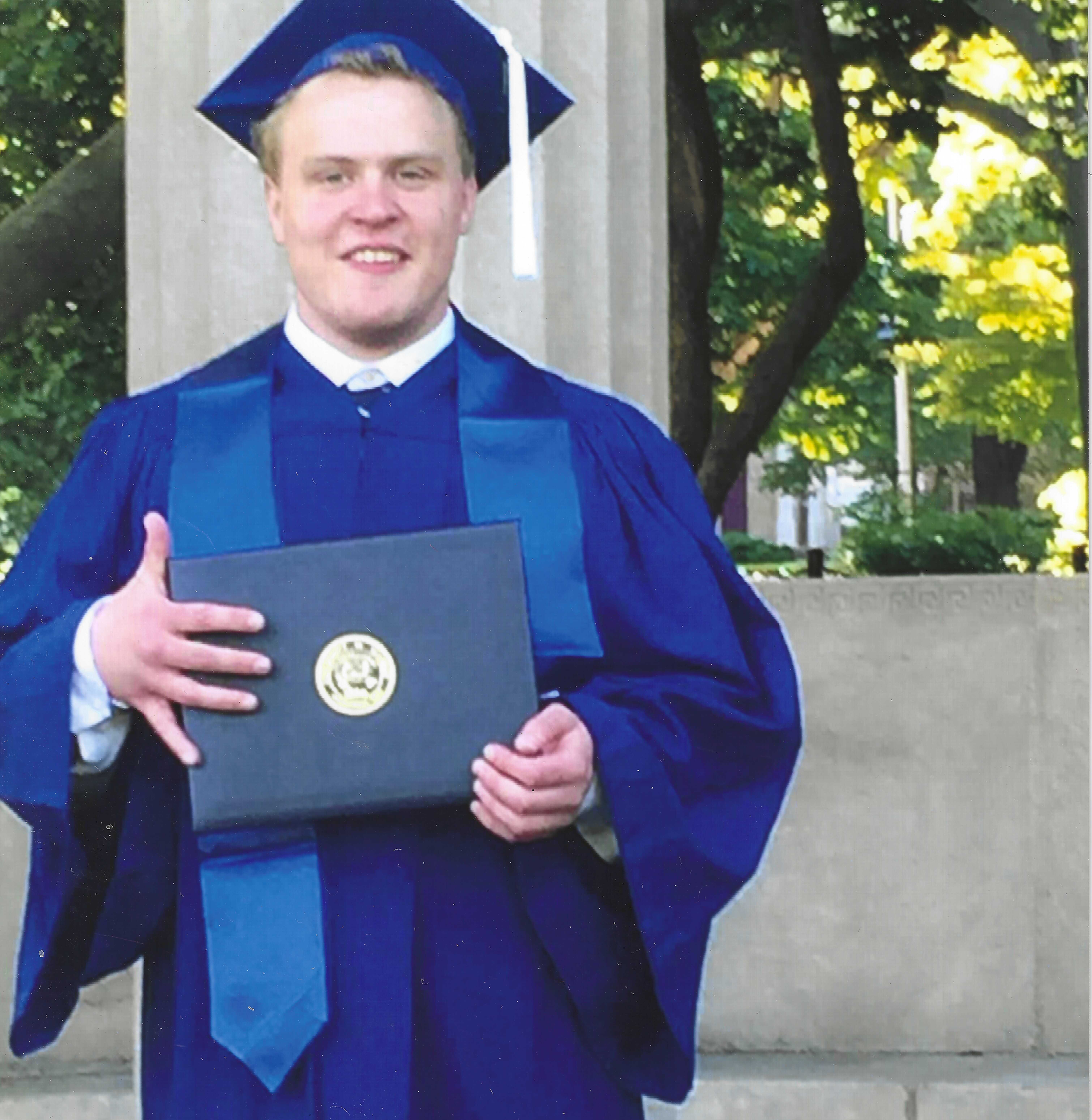
Holt Jones graduates U. of Illinois, May 2016
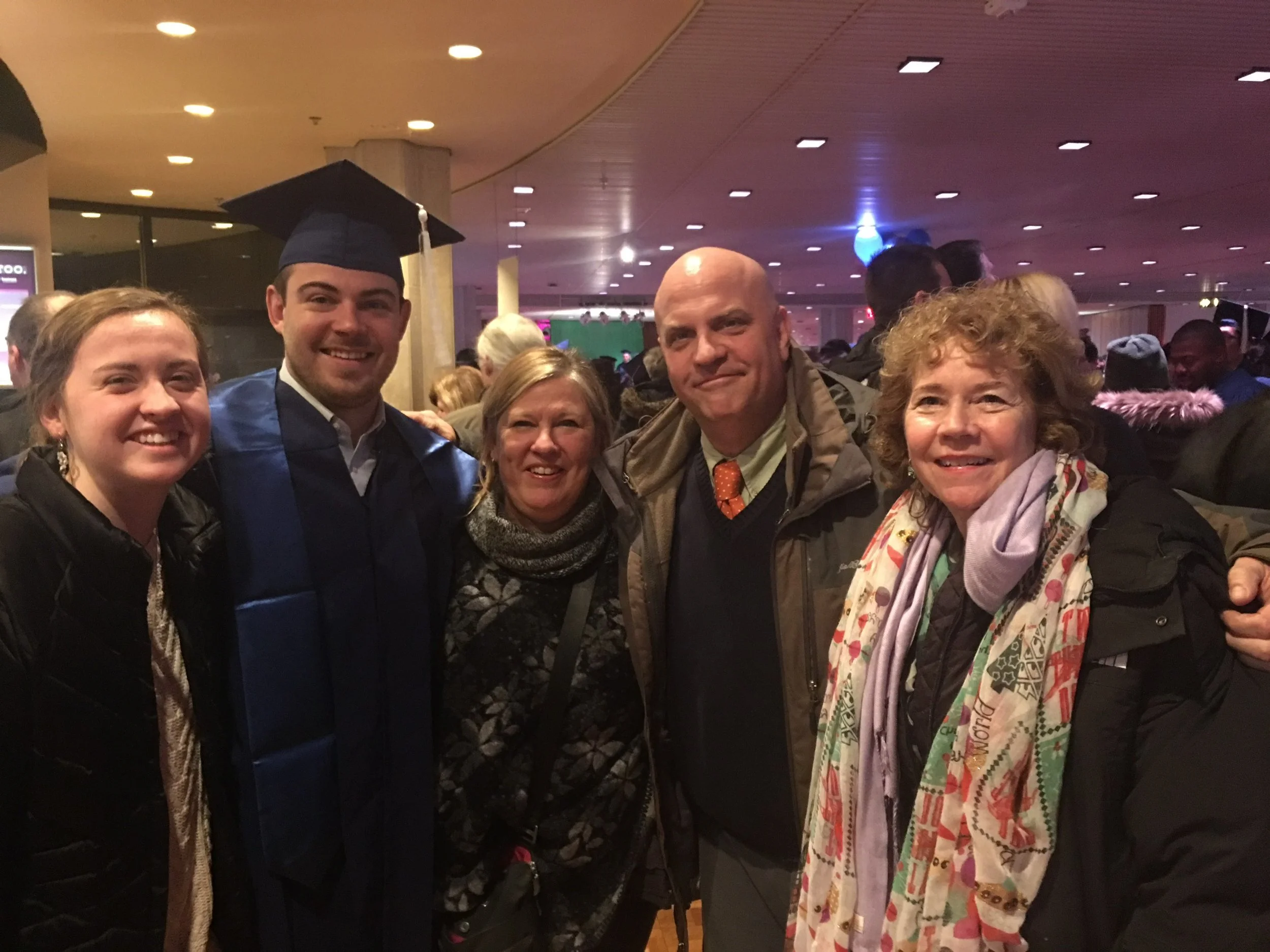
Carson Jones graduates U. of Illinois, December 2016 (from left Daisy, Carson, Susan, Richard, & Gail)
A Letter to Parents
I am a parent too. A father of three. I have two sons (Carson and Holt) and a daughter (Daisy). All three of them — thankfully — graduated from college. My sons graduated from the U. of Illinois, and my daughter graduated from Davidson College. There they are at their graduations on the right.
Like so many in the middle class, my wife and I financed our children’s college educations with some help from the grandparents and three 529s. Still we were very cash poor for about nine years.
While my boys did not contribute to their tuition, they did contribute and or fund their room and board. My daughter earned a $10,000 scholarship for year one, and Davidson was generous enough to provide financial aid that matched her cost for in-state U of I. Daisy also benefited from Davidson’s commitment to “graduate debt-free students,” which is a strategy your kids can also use at specific schools. My experience is utterly ordinary — we combined a bit of savings with familial and institutional generosity. Still we could have done better to maximize their choices. I wish the most for my oldest that we had.
Case in point, my son was accepted to Tulane, but took a pass on their generous-enough-merit-offer to stay closer to home. However, he really only had one private school choice. He also earned admission to the University of Indiana’s honors program, and IU was willing to match his cost to U of I. He took a pass on that too. He’s happy about his degree — that’s not the point. The point is Carson really should have had “clusters” of choices. He should have been weighing three or four Midwestern publics and three or four Midwestern privates with a like number of and types of schools from one - two other regions.
All of the most recent research in the college application space by folks like Jeff Selingo, Ron Lieber, Andrew Belasco, Dave Bergman, Michael Trivette, and Loren Pope points to “value” (in fact Selingo calls these valuable schools “Dream Schools”). The underpinning of my admissions counseling practice is based upon the utility of value — I want your child to get the most for the least. Belasco, et al. liken college cost to air travel cost. Any adult who flies even four or five times a year realizes no individual seat on the same airplane costs the same. Airline seats are discounted just as college tuition is. (In fact “merit aid” is not at all about merit but is really just a “coupon.”)
However, unlike the airline industry, college pricing isn’t controlled by market forces. College pricing is actually controlled by individual institutional goals. On one side we have the college-admissions-industrial-complex with an opaque set of criteria that varies by region, admissions cycle, and the characteristics of a current student body. On the other side we have millions of very under-informed teenagers who simply want to attend. In any given admissions cycle, no single applicant knows exactly who any given school wants for the freshman class. (Just take a cursory glance at parent groups on Facebook, and you’ll see hundreds of confused comments regarding “my child” who had better credentials than “his child” who lives next door yet “my child” didn’t get admitted to X.)
Just as any comprehensive investment strategy includes assets in several classes, the only way to master our current reality is with a robust portfolio of applications across the US. Success at the end of the admissions cycle will be marked by a dozen competing offers from a broad range of schools. All I can do is help your children form a portfolio built around diversity of region and size. They will get into schools, yes, but I sincerely want the most power in your family’s hands when it comes to make the fateful decision of May 1.
Give me a chance to help.
—
Richard C. Jones
Founder, wisecollegechoices.com